<?xml version="1.0" encoding="utf-8"?><feed xmlns="http://www.w3.org/2005/Atom" ><generator uri="https://jekyllrb.com/" version="4.4.1">Jekyll</generator><link href="https://blog.vampirepenguinstl.com/blogging/vp-blog/feed.xml" rel="self" type="application/atom+xml" /><link href="https://blog.vampirepenguinstl.com/blogging/vp-blog/" rel="alternate" type="text/html" /><updated>2025-12-26T16:38:01+00:00</updated><id>https://blog.vampirepenguinstl.com/blogging/vp-blog/feed.xml</id><title type="html">Vampire Penguin of St. Louis</title><subtitle>Vampire Penguin set out to create a lighter way to indulge.  Our shaved snow is made from a creamy frozen blend, delicately shaved into airy layers  that melt into smooth, sweet perfection.  It’s a dessert that feels decadent but never heavy — an experience that’s as unforgettable as it is refreshing.</subtitle><entry><title type="html">What is Shaved Snow?</title><link href="https://blog.vampirepenguinstl.com/blogging/vp-blog/2025/04/21/what-is-shaved-snow.html" rel="alternate" type="text/html" title="What is Shaved Snow?" /><published>2025-04-21T00:00:00+00:00</published><updated>2025-04-21T00:00:00+00:00</updated><id>https://blog.vampirepenguinstl.com/blogging/vp-blog/2025/04/21/what-is-shaved-snow</id><content type="html" xml:base="https://blog.vampirepenguinstl.com/blogging/vp-blog/2025/04/21/what-is-shaved-snow.html"><![CDATA[<h1 id="shaved-snow-shave-ice-and-snow-cones">Shaved Snow, Shave Ice, and Snow Cones?</h1>

<h2 id="whats-the-difference">What’s the Difference?</h2>

<p>We get this question a lot whenever customers try our dessert for the first time. So, what exactly <em>is</em> the difference between shaved snow, shave ice, and snow cones? If you want the full and colorful history of shaved ice as a dessert, check out our <a href="https://blog.vampirepenguinstl.com/blogging/vp-blog/2025/03/21/history-of-shaved-ice.html">blog post - History of Shaved Ice</a>.</p>

<p>Let’s start with some examples:</p>

<h2 id="snow-cones">Snow Cones</h2>

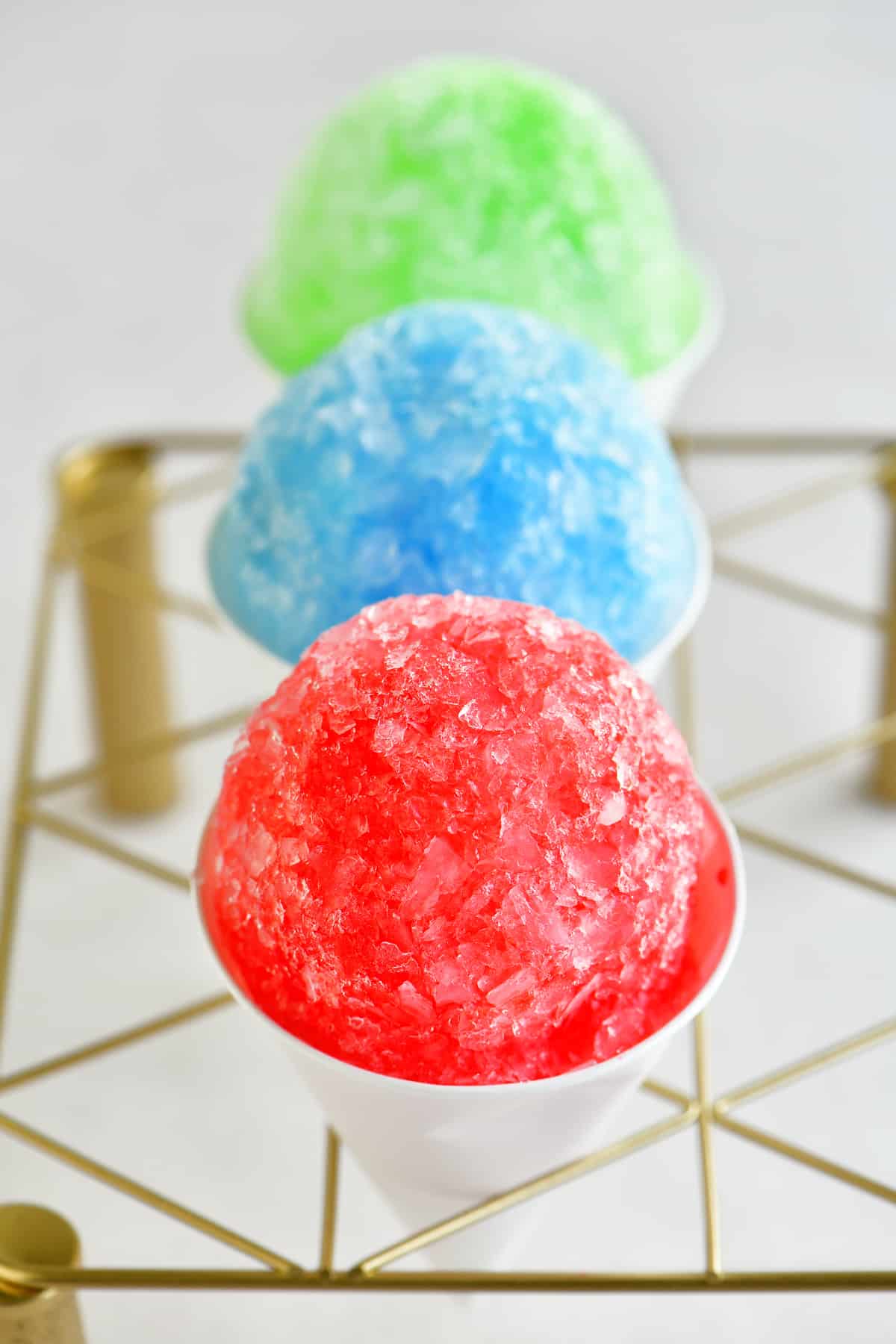
<p>Here’s a typical snow cone:</p>

<p><img src="https://www.thegunnysack.com/wp-content/uploads/2020/07/Red-Blue-Green-Snow-Cones.jpg" alt="snow cone" />
(photo credit The Gunny Sack) <a href="https://www.thegunnysack.com/snow-cone-recipes/">source</a></p>

<p>Traditionally, snow cones are made by crushing ice frozen around 30°F and serving it in a cone-shaped cup. Syrups of various flavors are poured over the ice. The texture includes larger ice chunks and is crunchy. Because the syrups sit on top, they generally pool at the bottom, leaving inconsistent flavor throughout the dessert.</p>

<h2 id="shave-ice">Shave Ice</h2>

<p>A popular example is found in Hawaii:</p>

<p><img src="https://www.themanual.com/tachyon/sites/9/2019/10/hawaiian-shave-ice.jpg?resize=800%2C533" alt="shave ice" />
(photo credit The Manual) <a href="https://www.themanual.com/food-and-drink/what-is-hawaiian-shave-ice/">source</a></p>

<p>Shave ice is made using a machine with a sharp blade that shaves a solid block of ice. The result is fluffy ice with very small ice particles, compacted into a bowl. Syrups are added like a snow cone, and additional toppings like red bean or condensed milk may be included. While the fine ice does capture syrup better than snow cones, syrups still tend to pool at the bottom, creating a slushy texture as it melts.</p>

<h2 id="shaved-snow">Shaved Snow</h2>

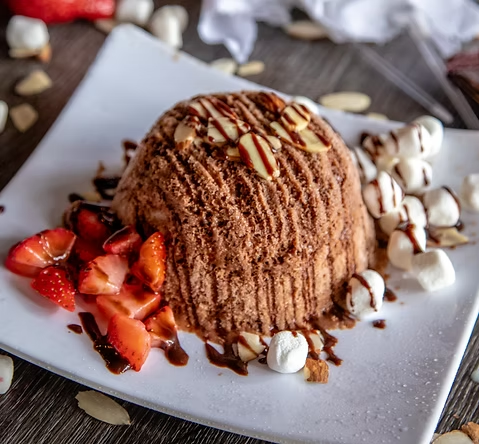
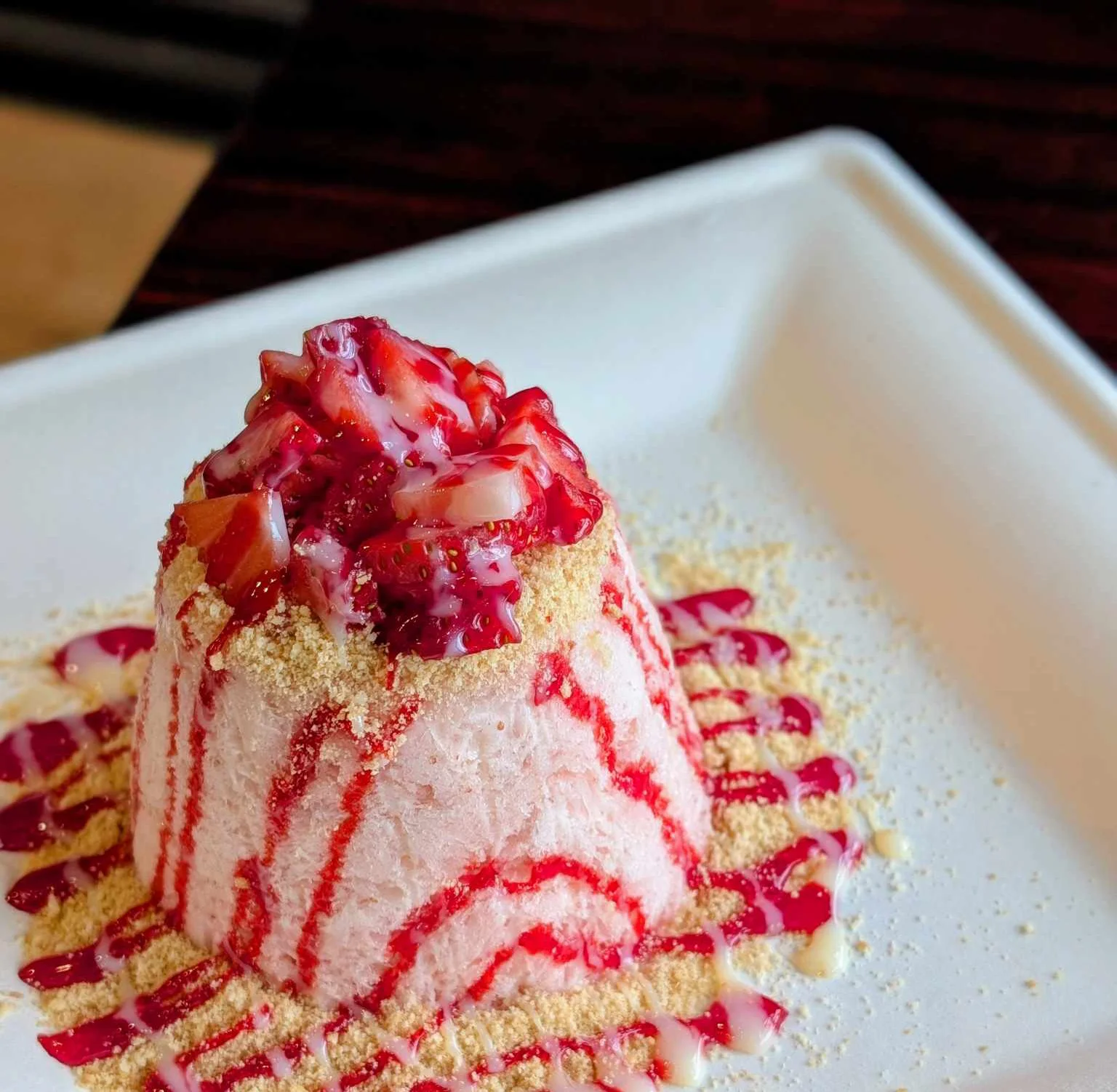
<p>At Vampire Penguin, we do things differently from traditional snow cones or shave ice:</p>

<p><img src="https://d1w7312wesee68.cloudfront.net/WvtNd9CbUQqllfDi43N5Gl2-yjMrtprEJzW-Ium4v00/ext:webp/quality:85/preset:xxl/c:1536:1502:ce:0:-269/plain/s3://toast-sites-resources-prod/restaurantImages/768ddda1-037d-4d9c-b5e3-ea0c69416375/1F567968434B446C8BC1D1A04496D62B.png" alt="shortcake" /></p>

<p>Our shaved snow begins with water and our proprietary flavor mixes. We blend in ice to create a smoothie-like texture, then freeze these “smoothies” down to an astonishing <strong>-50°F</strong>—yes, you read that correctly! This freezing process takes <strong>24–48 hours</strong> to ensure the blocks are fully frozen and reach the ideal temperature.</p>

<p>The result is a <strong>light, fluffy texture</strong>, similar to freshly fallen snow—no ice chunks, no crunch, just silky, soft snow.</p>

<p>Because we don’t use syrups, the flavor is <strong>consistent and rich from top to bottom</strong>. And when it melts? It melts like ice cream, not into a sugary puddle, giving a smooth, creamy finish.</p>

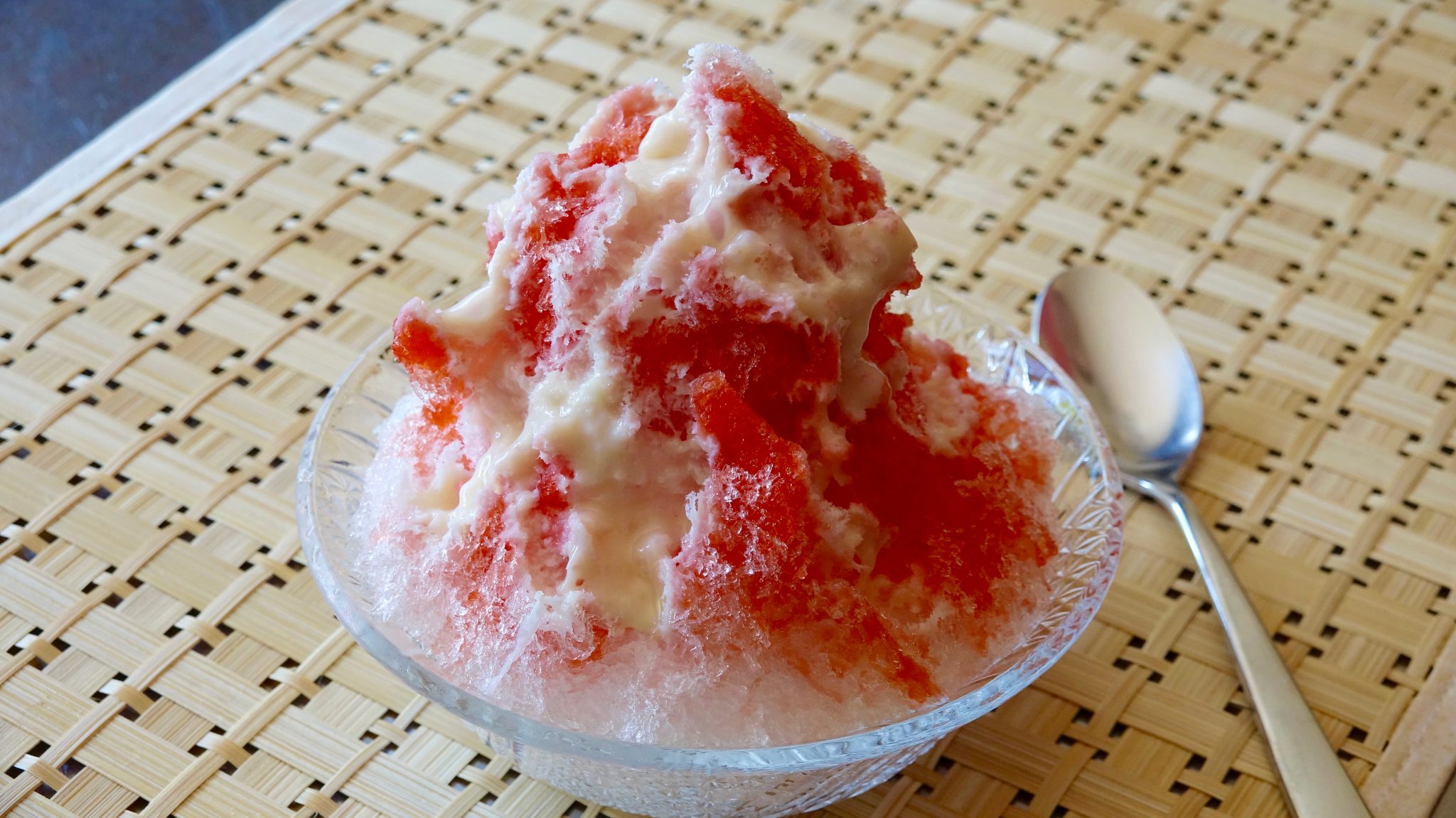
<p>Our shaved snow is distinct from other shaved ice desserts like Bingsu (Korean style) or Kakigori (Japanese style):</p>

<p><img src="https://www.japanesecooking101.com/wp-content/uploads/2018/07/DSC00302.jpg" alt="kakigori" />
(photo credit Japanese Cooking 101) <a href="https://www.japanesecooking101.com/strawberry-and-milk-kakigori/">source</a></p>

<p>We can add toppings like condensed milk, but it’s not the main focus. The star is the soft, flavorful snow itself—a dessert experience unlike any other.</p>]]></content><author><name></name></author><summary type="html"><![CDATA[Shaved Snow, Shave Ice, and Snow Cones? What’s the Difference? We get this question a lot whenever customers try our dessert for the first time. So, what exactly is the difference between shaved snow, shave ice, and snow cones? If you want the full and colorful history of shaved ice as a dessert, check out our blog post - History of Shaved Ice. Let’s start with some examples: Snow Cones Here’s a typical snow cone: (photo credit The Gunny Sack) source Traditionally, snow cones are made by crushing ice frozen around 30°F and serving it in a cone-shaped cup. Syrups of various flavors are poured over the ice. The texture includes larger ice chunks and is crunchy. Because the syrups sit on top, they generally pool at the bottom, leaving inconsistent flavor throughout the dessert. Shave Ice A popular example is found in Hawaii: (photo credit The Manual) source Shave ice is made using a machine with a sharp blade that shaves a solid block of ice. The result is fluffy ice with very small ice particles, compacted into a bowl. Syrups are added like a snow cone, and additional toppings like red bean or condensed milk may be included. While the fine ice does capture syrup better than snow cones, syrups still tend to pool at the bottom, creating a slushy texture as it melts. Shaved Snow At Vampire Penguin, we do things differently from traditional snow cones or shave ice: Our shaved snow begins with water and our proprietary flavor mixes. We blend in ice to create a smoothie-like texture, then freeze these “smoothies” down to an astonishing -50°F—yes, you read that correctly! This freezing process takes 24–48 hours to ensure the blocks are fully frozen and reach the ideal temperature. The result is a light, fluffy texture, similar to freshly fallen snow—no ice chunks, no crunch, just silky, soft snow. Because we don’t use syrups, the flavor is consistent and rich from top to bottom. And when it melts? It melts like ice cream, not into a sugary puddle, giving a smooth, creamy finish. Our shaved snow is distinct from other shaved ice desserts like Bingsu (Korean style) or Kakigori (Japanese style): (photo credit Japanese Cooking 101) source We can add toppings like condensed milk, but it’s not the main focus. The star is the soft, flavorful snow itself—a dessert experience unlike any other.]]></summary></entry><entry><title type="html">History of Shaved Ice</title><link href="https://blog.vampirepenguinstl.com/blogging/vp-blog/2025/03/21/history-of-shaved-ice.html" rel="alternate" type="text/html" title="History of Shaved Ice" /><published>2025-03-21T00:00:00+00:00</published><updated>2025-03-21T00:00:00+00:00</updated><id>https://blog.vampirepenguinstl.com/blogging/vp-blog/2025/03/21/history-of-shaved-ice</id><content type="html" xml:base="https://blog.vampirepenguinstl.com/blogging/vp-blog/2025/03/21/history-of-shaved-ice.html"><![CDATA[<h1 id="shave-ice-a-cool-history">Shave Ice: A “Cool” History</h1>

<h2 id="from-imperial-courts-to-night-markets-the-global-journey-of-shaved-ice--a-universal-language-of-summer">From Imperial Courts to Night Markets: The Global Journey of Shaved Ice — A Universal Language of Summer</h2>

<p>From the humid night markets of Taipei to the vibrant street stalls of Manila, shaved ice speaks a universal language of summer. Whether known as <em>bao bing</em> in China, <em>halo-halo</em> (“mix-mix”) in the Philippines, or <em>nam kang sai</em> in Thailand, this frozen dessert serves as a global canvas for local flavors. Around the world, diners enjoy towering bowls topped with sweet red beans, condensed milk, taro, purple yam ice cream, jackfruit, and countless regional additions.</p>

<p>While shaved ice is now widely accessible, its history spans more than a millennium—evolving from a labor-intensive luxury reserved for elites into a modern, high-tech culinary experience.<br />
<a href="https://random-times.com/2021/06/11/bao-bing-the-sweet-treat-that-has-been-cool-for-more-than-1000-years/">Source - Bao Bing</a>,<br />
<a href="https://en.wikipedia.org/wiki/Ice_trade">Source - Ice Trades</a></p>

<h2 id="an-ancient-aristocratic-delicacy">An Ancient Aristocratic Delicacy</h2>

<p>The origins of shaved ice can be traced back to 7th-century China, but it became a well-documented delicacy among the Japanese aristocracy during the Heian period (794–1185). In <em>The Pillow Book</em>, court lady Sei Shōnagon described enjoying shaved ice flavored with sweet plant saps and served in newly crafted metal bowls. At the time, ice was an extremely rare commodity, harvested during winter and stored in guarded ice houses known as <em>himuro</em>.</p>

<p>Shaved ice remained a luxury for centuries. It was not until the 19th century that it became accessible to the general public—thanks in part to the global “frozen water trade,” which transported ice harvested in the United States to destinations as distant as Japan. Known as “Boston Ice,” these shipments took nearly six months to arrive and fundamentally reshaped the availability of cold desserts worldwide.<br />
<a href="https://en.wikipedia.org/wiki/Kakig%C5%8Dri">Source - Kakigori</a>,<br />
<a href="https://eric.ed.gov/?id=ED422262">Source - Japanese aristocracy and culture</a></p>

<h2 id="the-mechanical-revolution">The Mechanical Revolution</h2>

<p>The most transformative shift in shaved ice history came with the move from manual labor to mechanical innovation. For centuries, large blocks of ice were shaved by hand using simple blades or hand-cranked devices. The introduction of mechanical ice-shaving machines in the early 20th century allowed vendors to serve larger crowds while refining the dessert’s defining texture.</p>

<p>This innovation produced the light, airy consistency often compared to “fresh-fallen snow” or “angel snow,” distinguishing authentic shaved ice from the crunchier, crushed-ice texture of standard snow cones. Today, shaved ice is so culturally ingrained in Japan that July 25th is officially celebrated as “Kakigōri Day,” commemorating both its cultural legacy and peak summer temperatures.<br />
<a href="https://en.wikipedia.org/wiki/Kakig%C5%8Dri">Source - Kakigori</a>,<br />
<a href="https://www.oed.com/dictionary/shave-ice_n?tl=true">Source - Shave Ice Word Definition</a></p>

<h2 id="americanization-of-the-dessert">“Americanization” of the Dessert</h2>

<h3 id="the-frozen-luxury-ice-in-early-america">The Frozen Luxury: Ice in Early America</h3>

<p>Ice holds a rich and complex place in American history. For centuries, the difficulty of harvesting and storing ice meant that chilled foods and desserts were reserved for the wealthy elite, who could afford private ice houses. This exclusivity changed dramatically in the 19th century with the rise of the “frozen water trade.”</p>

<p>Frederic Tudor—known as the “Ice King”—revolutionized the industry in 1806 by shipping ice harvested from Massachusetts ponds to the Caribbean island of Martinique. He later expanded operations to Havana and major southern U.S. cities such as Charleston and Savannah. To improve efficiency, Tudor partnered with inventor Nathaniel Wyeth, who developed a horse-drawn ice cutter in 1825. This innovation standardized ice blocks and reduced harvesting costs from 30 cents per ton to just 10 cents.</p>

<p>Wyeth’s uniform blocks packed more efficiently in ship holds, and when combined with sawdust insulation, dramatically reduced ice loss during long voyages. By the 1830s, the frozen water trade extended as far as India, where shipments to Calcutta established lucrative new markets. Eventually, this global supply chain brought Boston Ice to Japan, enabling the widespread public consumption of shaved ice for the first time in the 19th century.</p>

<h3 id="the-nixon-treat">The Nixon Treat</h3>

<p>No, this isn’t Watergate—but it <em>is</em> made of water. In 1972, Richard Nixon famously shared a bowl of <em>bao bing</em> with Mao Zedong during his historic diplomatic visit to China. Despite this high-profile moment, shaved ice did not see widespread popularity in the United States until the late 1980s.</p>

<p>During this same period, Hawaiian shave ice was rising in prominence, developing along a parallel path with its own distinct taste, texture, and flavor philosophy. These regional interpretations helped set Hawaiian shave ice apart from other emerging shaved ice styles across the country.</p>

<p>As shaved ice spread, many regions began serving it alongside their marquee desserts. In the 19th century, American soda shops offered a treat known as <em>ice-cream soda water</em>, made by hand-shaving ice from large blocks and mixing it with fruit syrups and heavy cream. By modern standards, these early creations could be viewed as predecessors to what are now called “dirty sodas.”</p>

<p>In the Mid-Atlantic, the Baltimore snowball and Philadelphia-style water ice emerged as two distinct regional interpretations. Traditional Baltimore snowballs used manually shaved ice that was coarser than modern machine-shaved varieties but densely packed to endure intense summer heat. These were typically topped with bold, vividly sweet syrups.</p>

<p>Philadelphia’s water ice, by contrast, developed a smoother, denser consistency—closer to a frozen slush than shaved ice—and relied on fully blended flavor bases rather than surface toppings. This approach created a uniform flavor throughout the dessert, while snowballs emphasized contrast between ice and syrup. Over time, water ice became so culturally ingrained that shops like Rita’s became synonymous with the term itself, often confusing visitors unfamiliar with the regional distinction.</p>

<h2 id="evolution-and-refinement-of-the-icy-treat">Evolution and Refinement of the Icy Treat</h2>

<p>Vampire Penguin draws inspiration from Asian cultures and regional traditions while embracing modern innovation. Unlike traditional methods that rely on surface syrups, Vampire Penguin shave ice is infused with flavor throughout the entire ice block. Frozen at an ultra-cold −50 degrees, the ice shaves into an exceptionally light, smooth texture.</p>

<p>The result is a low-calorie, flavor-forward dessert designed for maximum customization—ranging from classic toppings like condensed milk to modern American favorites such as chocolate sauce or sour gummy worms.</p>

<p><img src="/blogging/vp-blog/assets/tuxedo.avif" alt="Tux" /></p>]]></content><author><name></name></author><summary type="html"><![CDATA[Shave Ice: A “Cool” History From Imperial Courts to Night Markets: The Global Journey of Shaved Ice — A Universal Language of Summer From the humid night markets of Taipei to the vibrant street stalls of Manila, shaved ice speaks a universal language of summer. Whether known as bao bing in China, halo-halo (“mix-mix”) in the Philippines, or nam kang sai in Thailand, this frozen dessert serves as a global canvas for local flavors. Around the world, diners enjoy towering bowls topped with sweet red beans, condensed milk, taro, purple yam ice cream, jackfruit, and countless regional additions. While shaved ice is now widely accessible, its history spans more than a millennium—evolving from a labor-intensive luxury reserved for elites into a modern, high-tech culinary experience. Source - Bao Bing, Source - Ice Trades An Ancient Aristocratic Delicacy The origins of shaved ice can be traced back to 7th-century China, but it became a well-documented delicacy among the Japanese aristocracy during the Heian period (794–1185). In The Pillow Book, court lady Sei Shōnagon described enjoying shaved ice flavored with sweet plant saps and served in newly crafted metal bowls. At the time, ice was an extremely rare commodity, harvested during winter and stored in guarded ice houses known as himuro. Shaved ice remained a luxury for centuries. It was not until the 19th century that it became accessible to the general public—thanks in part to the global “frozen water trade,” which transported ice harvested in the United States to destinations as distant as Japan. Known as “Boston Ice,” these shipments took nearly six months to arrive and fundamentally reshaped the availability of cold desserts worldwide. Source - Kakigori, Source - Japanese aristocracy and culture The Mechanical Revolution The most transformative shift in shaved ice history came with the move from manual labor to mechanical innovation. For centuries, large blocks of ice were shaved by hand using simple blades or hand-cranked devices. The introduction of mechanical ice-shaving machines in the early 20th century allowed vendors to serve larger crowds while refining the dessert’s defining texture. This innovation produced the light, airy consistency often compared to “fresh-fallen snow” or “angel snow,” distinguishing authentic shaved ice from the crunchier, crushed-ice texture of standard snow cones. Today, shaved ice is so culturally ingrained in Japan that July 25th is officially celebrated as “Kakigōri Day,” commemorating both its cultural legacy and peak summer temperatures. Source - Kakigori, Source - Shave Ice Word Definition “Americanization” of the Dessert The Frozen Luxury: Ice in Early America Ice holds a rich and complex place in American history. For centuries, the difficulty of harvesting and storing ice meant that chilled foods and desserts were reserved for the wealthy elite, who could afford private ice houses. This exclusivity changed dramatically in the 19th century with the rise of the “frozen water trade.” Frederic Tudor—known as the “Ice King”—revolutionized the industry in 1806 by shipping ice harvested from Massachusetts ponds to the Caribbean island of Martinique. He later expanded operations to Havana and major southern U.S. cities such as Charleston and Savannah. To improve efficiency, Tudor partnered with inventor Nathaniel Wyeth, who developed a horse-drawn ice cutter in 1825. This innovation standardized ice blocks and reduced harvesting costs from 30 cents per ton to just 10 cents. Wyeth’s uniform blocks packed more efficiently in ship holds, and when combined with sawdust insulation, dramatically reduced ice loss during long voyages. By the 1830s, the frozen water trade extended as far as India, where shipments to Calcutta established lucrative new markets. Eventually, this global supply chain brought Boston Ice to Japan, enabling the widespread public consumption of shaved ice for the first time in the 19th century. The Nixon Treat No, this isn’t Watergate—but it is made of water. In 1972, Richard Nixon famously shared a bowl of bao bing with Mao Zedong during his historic diplomatic visit to China. Despite this high-profile moment, shaved ice did not see widespread popularity in the United States until the late 1980s. During this same period, Hawaiian shave ice was rising in prominence, developing along a parallel path with its own distinct taste, texture, and flavor philosophy. These regional interpretations helped set Hawaiian shave ice apart from other emerging shaved ice styles across the country. As shaved ice spread, many regions began serving it alongside their marquee desserts. In the 19th century, American soda shops offered a treat known as ice-cream soda water, made by hand-shaving ice from large blocks and mixing it with fruit syrups and heavy cream. By modern standards, these early creations could be viewed as predecessors to what are now called “dirty sodas.” In the Mid-Atlantic, the Baltimore snowball and Philadelphia-style water ice emerged as two distinct regional interpretations. Traditional Baltimore snowballs used manually shaved ice that was coarser than modern machine-shaved varieties but densely packed to endure intense summer heat. These were typically topped with bold, vividly sweet syrups. Philadelphia’s water ice, by contrast, developed a smoother, denser consistency—closer to a frozen slush than shaved ice—and relied on fully blended flavor bases rather than surface toppings. This approach created a uniform flavor throughout the dessert, while snowballs emphasized contrast between ice and syrup. Over time, water ice became so culturally ingrained that shops like Rita’s became synonymous with the term itself, often confusing visitors unfamiliar with the regional distinction. Evolution and Refinement of the Icy Treat Vampire Penguin draws inspiration from Asian cultures and regional traditions while embracing modern innovation. Unlike traditional methods that rely on surface syrups, Vampire Penguin shave ice is infused with flavor throughout the entire ice block. Frozen at an ultra-cold −50 degrees, the ice shaves into an exceptionally light, smooth texture. The result is a low-calorie, flavor-forward dessert designed for maximum customization—ranging from classic toppings like condensed milk to modern American favorites such as chocolate sauce or sour gummy worms.]]></summary></entry></feed>